I often think we Americans are idiots when it comes to food. Breakfast, for instance, is, for a lot of people, basically an entire meal devoted to desert. Sugar drenched pastries, quick breads, and deep fried monstrosities. Don't get me wrong, I love a good danish but not for breakfast. Other people use it as an excuse to down slabs of fried meat and refined carbs. The worse I've seen is when people get those big combo breakfasts that seem to award points for artery assault. Honestly, I don't get it.
I believe in a big breakfast but all that sugar in the morning gives me a headache and all the fried meats make me feel like I'm sweating grease for an hour. It's just not very sensible and other places in the world don't do this. The Japanese eat miso soup, rice, and maybe a piece of broiled fish. Even muesli, although high in sugar, is full of protein and calcium when served with yogurt.
Personally, I've started making large batches of hearty vegetable soups and boiled eggs. It's surprisingly satisfying and just as easy as making oatmeal, and much easier than pancakes.
Wednesday, January 27, 2016

Tuesday, January 26, 2016
Organization
One of the best things about this reading project is that I'm connecting with people I'd never thought of as readers over books. I've had several long conversations with them over books in which I'm getting more titles to check out. In fact, my backlog is getting large enough that some monthly themes seem to be in order.
February - month of series lit. I'm in the middle of an unusual number of series. More on that later, but without even trying February's list is already up over 40 books.
March - month of the recommended, suggested, and gifts. I want to keep those reader conversations going, and it seems like the best way is to read the books people recommend me. So I'm going to start sifting through my stacks for those books. If you have any suggestions, by all means comment them.
April and on I don't have any solid ideas for. I think at least one month in there will need to be "other list leftovers" and, of course, I'm going to try to keep 4 or 5 professional development books on each list to satisfy my sub goal. I'm thinking about specializing in short stories and collections of short stories one month and maybe poetry another. Another thought might be "classics I never got around to reading" and yet another might be "books from other people's lists." There's a lot of options.
That's the glorious thing about reading, there's always more to discover.
February - month of series lit. I'm in the middle of an unusual number of series. More on that later, but without even trying February's list is already up over 40 books.
March - month of the recommended, suggested, and gifts. I want to keep those reader conversations going, and it seems like the best way is to read the books people recommend me. So I'm going to start sifting through my stacks for those books. If you have any suggestions, by all means comment them.
April and on I don't have any solid ideas for. I think at least one month in there will need to be "other list leftovers" and, of course, I'm going to try to keep 4 or 5 professional development books on each list to satisfy my sub goal. I'm thinking about specializing in short stories and collections of short stories one month and maybe poetry another. Another thought might be "classics I never got around to reading" and yet another might be "books from other people's lists." There's a lot of options.
That's the glorious thing about reading, there's always more to discover.
Monday, January 25, 2016
Readicide by Kelly Gallagher
One of my of my sub goals for the year is to read a pedagogy book each month. I hate pedagogy books. You'd think that books written by and for the people responsible for educating our young, and therefore intelligent strong readers themselves, would be well written. They aren't, as a rule. Generally there is about 60 pages of content delivered in a repetitive and overly formatted manner over 200 pages. (I feel there is a deeper statement about the education in the U.S. to be made here.) Nevertheless, if I have a weakness as a teacher, it is that I'm unfamiliar with the formal world of teaching and therefore have a hard time comparing notes with other teachers. Hence the goal.
So, for the genre, Readicide is a pretty decent read and the reason I'm blogging it is that I feel anyone interested in the state of education in the U.S. would find it interesting. (This means you parents.) I suspect that Gallagher had a broader audience in mind when he wrote Readicide.
Readicide does a good job tracing and outlining what's gone wrong in education over the past few years. He has, in fact, loads to say about No Child Left Behind. He isolates why we ever thought it was a good idea and comes just shy of calling it fraud...which it was. Continuing on, Gallagher traces how the NCLB policies have had far reaching effects. High stakes, multiple choice tests are just wrong headed.
Speaking as someone in the trenches, teaching the LD population: hallelujah brother. We need to be emphasizing critical thinking over fact memorization. We need to get them reading and thinking and experiencing. Teaching to these tests is producing smart kids who can't think their way out of paper bags with a flashlight and a map.
However, as good a job as Gallagher does outlining the problem, he doesn't spend much time on solutions. He points in some good directions, and I plan to follow up, but he ended up writing more of a polemic. Unfortunately for me, I'm already there.
Anyway, if you have a kid in school (private too) you should read this. It will give you a good basis of understanding for the issues involved and the pressures your student's teachers face. It will arm you with facts and point you to more credible sources about what's going on. More than anything else, this is a very good reference for those concerned with these issues. The references are voluminous and useful. Many teachers see what's happening and want to change things, but we need parent support to get the administrators to shift.
So, for the genre, Readicide is a pretty decent read and the reason I'm blogging it is that I feel anyone interested in the state of education in the U.S. would find it interesting. (This means you parents.) I suspect that Gallagher had a broader audience in mind when he wrote Readicide.
Readicide does a good job tracing and outlining what's gone wrong in education over the past few years. He has, in fact, loads to say about No Child Left Behind. He isolates why we ever thought it was a good idea and comes just shy of calling it fraud...which it was. Continuing on, Gallagher traces how the NCLB policies have had far reaching effects. High stakes, multiple choice tests are just wrong headed.
Speaking as someone in the trenches, teaching the LD population: hallelujah brother. We need to be emphasizing critical thinking over fact memorization. We need to get them reading and thinking and experiencing. Teaching to these tests is producing smart kids who can't think their way out of paper bags with a flashlight and a map.
However, as good a job as Gallagher does outlining the problem, he doesn't spend much time on solutions. He points in some good directions, and I plan to follow up, but he ended up writing more of a polemic. Unfortunately for me, I'm already there.
Anyway, if you have a kid in school (private too) you should read this. It will give you a good basis of understanding for the issues involved and the pressures your student's teachers face. It will arm you with facts and point you to more credible sources about what's going on. More than anything else, this is a very good reference for those concerned with these issues. The references are voluminous and useful. Many teachers see what's happening and want to change things, but we need parent support to get the administrators to shift.

Sunday, January 24, 2016
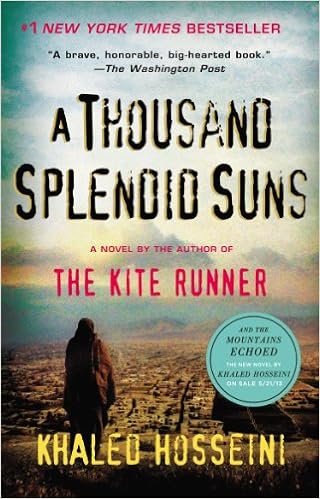
A Thousand Splendid Suns by Khalid Hosseini
I read Kite Runner over Thanksgiving break. I actually don't read that much mainstream fiction. My taste tends to run towards science fiction, fantasy, and magical realism. It's not a conscious choice, I just find it easier to pick up and get into genre fic. However, Kite Runner made a big enough splash on the social consciousness that I eventually got around to reading it. It was fantastic. I didn't really know much about the story or what to suspect other than that it had to do with current events. It was worth the read. However this post isn't really about Kite Runner.
When I find a book I like, I usually try to pick up whatever else the author has written. Hosseini thus far has written two other books A Thousand Splendid Suns and And the Mountains Echoed. I just finished A Thousand Splendid Suns. If anything, it's even better than Kite Runner.
A Thousand Splendid Suns follows the intertwined lives of two women: Miriam and Laila. Both have tragic lives in a normal sort of way but it's compounded by living in Afghanistan. Hosseini does a good job of illustrating the complex issues troubling the Afghan region using the lives of ordinary people. I spent about a quarter of the book crying my head off; the characters felt that real.
I'm looking forward to And the Mountains Echoed.

When I find a book I like, I usually try to pick up whatever else the author has written. Hosseini thus far has written two other books A Thousand Splendid Suns and And the Mountains Echoed. I just finished A Thousand Splendid Suns. If anything, it's even better than Kite Runner.
A Thousand Splendid Suns follows the intertwined lives of two women: Miriam and Laila. Both have tragic lives in a normal sort of way but it's compounded by living in Afghanistan. Hosseini does a good job of illustrating the complex issues troubling the Afghan region using the lives of ordinary people. I spent about a quarter of the book crying my head off; the characters felt that real.
I'm looking forward to And the Mountains Echoed.
Saturday, January 23, 2016
Atlanta and Winter Weather
Atlanta gets a lot of flak for how its residents handle winter weather.
Some of it's warranted. I once saw a woman drive 10 miles an hour down hill riding her brakes because it was predicted to be bad. . . soon.
I've also seen:
On the other hand, when Atlanta gets winter weather it doesn't get snow. Snow is actually relatively easy to deal with. Any northern city moves it out of the way with their fleets of plows before it has a chance to melt and refreeze. So it sits mounded up like bumpers on a bowling alley until a thaw. Even in Atlanta, most of the time snow is not a problem. It hits the ground and melts within a day. Most of the time.
The problem is, every once a while, about once a year or so, Atlanta gets an ice storm. Before moving to Atlanta, I'd only ever seen one ice storm. It was severe enough that it shut southern Michigan down for two days and a week later you could still see pine trees snapped in half like toothpicks along I-75. Granted, things were back to business with in 48 hours but it's one of the few times in my childhood I can remember the state still shut down two whole days after the weather was over.
Ice is nasty business and Atlanta gets a lot of ice storms. We don't get a lot of snow down here but when the weather turns "cold for us" it hovers right at the freezing line. So what'll happen is that Atlanta and the environs will get 2 to 6 inches of freezing rain. If we are lucky it'll just coat the roads and turn them into canals of sheet ice. If we are not lucky, the ice coats everything from tree branches to powerlines. Trees come down, power lines snap, and whole communities are without power for a week because the service trucks can't get past downed trees across iced over roads. In a weird way, it's beautiful but it's hard for people to appreciate when they don't have power and can't navigate their ways to the grocery stores or emergency rooms. And that's the situation if we are lucky and the low temperature is just a 24 hour dip.
Unfortunately, every couple of years Atlanta gets the ice along with a more serious cold snap. So we get all the initial nastiness followed by a rapid cycle of thawing and refreezing as the temperature gets just above freezing during the day and then refreezes overnight. Over and over and over. This creates massive sheets of ice that stretch along the roads for miles and just shuts the city down until the temperatures come up. The worst cycle I've seen lasted 10 days.
So yes, Atlanta gets a little hands in the air, head exploding, panicked about winter weather. Yes, no one down here know's how to deal with it. And yes, a northern city/state wouldn't get paralyzed under the similar conditions.
Want to know why?
1. Northern cities have the infrastructure to deal with these conditions. Up north, once the weather turns, it stays cold for 3 to 5 months before a thaw. So, the cities and states invest in salt trucks and plows to keep the roads moving. The power lines have stronger reinforced connections to the poles and can handle more weight. And all of this is a good use of civic funds because it prepares for conditions that last at least a quarter of the year. Georgia had, last time I checked, 5 plows for the whole state because this only happens once a year...and not even every year. It's not a good use of funds maintaining a large fleet of plows for one week of the year that may or may not happen.
2. Georgia doesn't get snow. It gets ice. Snow is much easier to deal with. You can shovel snow. In the worst of the ice storms I've seen people out with pick axes and mallets breaking the ice up before it could be moved.
So go gentle when you mock the South and its attitudes on winter weather. Because it doesn't happen often, but when it does it's worse than "a little bit of snow" and we don't get opportunity to practice as much. It makes an impression and it's scary. The people get a little ridiculous. It's true. However, you would too if a brief snap of winter weather could mean isolation from grocery stores and basic medical care. Or if it meant the loss of power and therefore heat for up to two weeks. We are a little complacent in the North about what the weather can mean without our plows, salt trucks, and tire chains.
Go gentle. It's ok to laugh, we laugh at ourselves and our helplessness. But what would you do without the plows and salt trucks. What would you do without power. What would you do without access to food and medical care.
Go gentle.
Some of it's warranted. I once saw a woman drive 10 miles an hour down hill riding her brakes because it was predicted to be bad. . . soon.
I've also seen:
- The grocery stores completely emptied gladiator style of bread and milk because a flake of snow was predicted in the next 24 hours. Soccer moms were fighting over the nesquick on aisle three and the stock boys huddled in a mass in the floral department crying or catatonic.
- A college campus cancel class because the student body was outside trying to catch snow flakes that were melting before they got below the tree line on their tongues.
- A whole group of adults slipping, sliding, and giggling like little kids on a patch of 'ice' that was actually just a bit of wet pavement.
On the other hand, when Atlanta gets winter weather it doesn't get snow. Snow is actually relatively easy to deal with. Any northern city moves it out of the way with their fleets of plows before it has a chance to melt and refreeze. So it sits mounded up like bumpers on a bowling alley until a thaw. Even in Atlanta, most of the time snow is not a problem. It hits the ground and melts within a day. Most of the time.
The problem is, every once a while, about once a year or so, Atlanta gets an ice storm. Before moving to Atlanta, I'd only ever seen one ice storm. It was severe enough that it shut southern Michigan down for two days and a week later you could still see pine trees snapped in half like toothpicks along I-75. Granted, things were back to business with in 48 hours but it's one of the few times in my childhood I can remember the state still shut down two whole days after the weather was over.
Ice is nasty business and Atlanta gets a lot of ice storms. We don't get a lot of snow down here but when the weather turns "cold for us" it hovers right at the freezing line. So what'll happen is that Atlanta and the environs will get 2 to 6 inches of freezing rain. If we are lucky it'll just coat the roads and turn them into canals of sheet ice. If we are not lucky, the ice coats everything from tree branches to powerlines. Trees come down, power lines snap, and whole communities are without power for a week because the service trucks can't get past downed trees across iced over roads. In a weird way, it's beautiful but it's hard for people to appreciate when they don't have power and can't navigate their ways to the grocery stores or emergency rooms. And that's the situation if we are lucky and the low temperature is just a 24 hour dip.
Unfortunately, every couple of years Atlanta gets the ice along with a more serious cold snap. So we get all the initial nastiness followed by a rapid cycle of thawing and refreezing as the temperature gets just above freezing during the day and then refreezes overnight. Over and over and over. This creates massive sheets of ice that stretch along the roads for miles and just shuts the city down until the temperatures come up. The worst cycle I've seen lasted 10 days.
- I watched cars slide down hills a quarter of a mile into intersections and not because the driver made any mistake, aside from being on the road.
- I've seen the interstates completely covered over with sheets of black ice.
- I've seen people abandon their cars on roads that really were practically undrivable...even for me... because we don't have the vehicles down here or the equipment to handle snow and ice on consumer vehicles.
- I've seen conditions on the road get worse 3 days after the precipitation was over as the snow slowly turned to ice perfect enough to skate on.
So yes, Atlanta gets a little hands in the air, head exploding, panicked about winter weather. Yes, no one down here know's how to deal with it. And yes, a northern city/state wouldn't get paralyzed under the similar conditions.
Want to know why?
1. Northern cities have the infrastructure to deal with these conditions. Up north, once the weather turns, it stays cold for 3 to 5 months before a thaw. So, the cities and states invest in salt trucks and plows to keep the roads moving. The power lines have stronger reinforced connections to the poles and can handle more weight. And all of this is a good use of civic funds because it prepares for conditions that last at least a quarter of the year. Georgia had, last time I checked, 5 plows for the whole state because this only happens once a year...and not even every year. It's not a good use of funds maintaining a large fleet of plows for one week of the year that may or may not happen.
2. Georgia doesn't get snow. It gets ice. Snow is much easier to deal with. You can shovel snow. In the worst of the ice storms I've seen people out with pick axes and mallets breaking the ice up before it could be moved.
So go gentle when you mock the South and its attitudes on winter weather. Because it doesn't happen often, but when it does it's worse than "a little bit of snow" and we don't get opportunity to practice as much. It makes an impression and it's scary. The people get a little ridiculous. It's true. However, you would too if a brief snap of winter weather could mean isolation from grocery stores and basic medical care. Or if it meant the loss of power and therefore heat for up to two weeks. We are a little complacent in the North about what the weather can mean without our plows, salt trucks, and tire chains.
Go gentle. It's ok to laugh, we laugh at ourselves and our helplessness. But what would you do without the plows and salt trucks. What would you do without power. What would you do without access to food and medical care.
Go gentle.
Friday, January 22, 2016
5 Random Personal Facts
1. When I was a kid all my dolls were named Lucy. I have no idea why. To the best of my knowledge, I'd never met a Lucy or seen "I Love Lucy." This made things very confusing when communicating with my parents. Was I talking about Lucy the bear, Lucy the koala bear, Lucy the stuffed rabbit (who was clothed in a very masculine suit by the way), or Lucy the giant stuffed doll.
2. I love hummus when I eat it off of a dippable edible object. However, licking it off a spoon is repulsive. I also feel that way about peanut butter and frosting. Except in the case of frosting, licking it off a finger is acceptable.
3. I can identify mayonnaise in a compound sauce or dip by smell. My accuracy is something like 95%.
4. According to my students, I have multiple tattoos and piercings all over my body, I've been a play tester for the their favorite first person shooters, and I'm wanted by the CIA as a notorious hacker. None of these things are true. In most cases, I have no idea how these rumors start. I've even tried to set them straight from time to time, generally it just makes it worse.
5. I love coffee and can drink gallons of the stuff before the caffeine makes me feel even a minor buzz. However, a single cup of black tea has enough caffeine in it to make my hands tremble.
2. I love hummus when I eat it off of a dippable edible object. However, licking it off a spoon is repulsive. I also feel that way about peanut butter and frosting. Except in the case of frosting, licking it off a finger is acceptable.
3. I can identify mayonnaise in a compound sauce or dip by smell. My accuracy is something like 95%.
4. According to my students, I have multiple tattoos and piercings all over my body, I've been a play tester for the their favorite first person shooters, and I'm wanted by the CIA as a notorious hacker. None of these things are true. In most cases, I have no idea how these rumors start. I've even tried to set them straight from time to time, generally it just makes it worse.
5. I love coffee and can drink gallons of the stuff before the caffeine makes me feel even a minor buzz. However, a single cup of black tea has enough caffeine in it to make my hands tremble.
Thursday, January 21, 2016
Hello World...
I'm a firm believer of the following: anything worth pursuing must be worth it even if no one notices.
I've believed this for a long time in an intellectual sort of way. However, it's hard to pour time into something like a blog when it feels like dumping one's ideas into the digital void. I decided recently to write anyway and, because it doesn't matter if anyone reads it, I try not to look at my usage statistics.
I decided to look at them today. (I was having some serious blank page issues) So, that I have readers in the U.S. is not surprising. I know for a fact that my dad reads every day (Hi Dad!), my husband reads most days, if not every day (love you honey), and I have a few coworkers that read from time to time (Yo, what up my work-peeps.) It's even possible a couple of my students have found my blog, I don't keep it a secret (remember to do the Steinbeck reading tonight, there will be a quiz :-P). Because my mother is an interesting topic of conversation, I have at least one regular reader in Finland (Hi Mummy) and I think some of her friends/students may check in now and then (Hey Jani, how's the book biz?). And that's about it. Or so I thought.
I'm getting pings in Mexico and Poland. Hi guys, whoever you are. I don't know people in either of these countries. Now, probably they just tripped across my blog as a result of a random search.
Still, it's kinda cool.
Subscribe to:
Posts (Atom)