Showing posts with label Rape. Show all posts

Friday, February 2, 2018

Milk and Honey by Rupi Kaur

This book has started a small controversy at my school. In August, one of my seniors chose Milk and Honey as her independent reading book. Coincidentally, a different student requested our media center specialist buy a copy for the school. Since, it was a best seller and appeared on several lists, she bought a copy without thinking much about it.

My student, when she realized that she would have to do a book talk on it, alerted me to some concerns about how to present on it appropriately. I flipped through her copy and immediately saw the issue, but she and I talked it through and she successfully (and appropriately) presented it to the class. Less than a day later, the media center specialist called me over to ask about the book. In the way these things tend to happen, the book had first been delivered to the middle school by mistake. So by the time it made it up to the high school, both principals at the middle school had flipped through it and had grave concerns. These concerns were shared with the High School principal and the media center specialist. At this point, it was time to ask the resident bibliovore for an opinion and that's me.
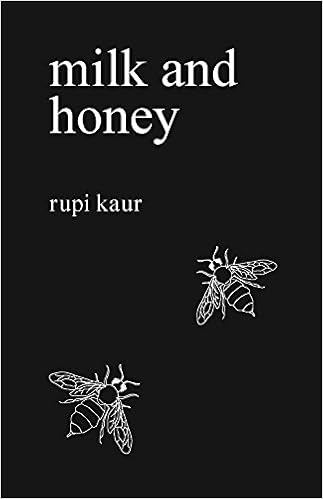
Milk and Honey is a collection of diary style poetry and prose having to do with the Kaur's first 21 years. She had a rough time of it. She experienced abuse and pain, but she also experienced love and healing. There are many references to sex and some of the line drawings are a bit suggestive. In several places Kaur expresses her experiences graphically.

There's nothing wrong with this book. It's memoir. These poems are this woman's experiences. It might make me wince in places but it didn't feel like shock value to me, just the expression of a woman who refuses to feel shame for what happened to her. In terms of theme, this is an excellent book for young women to read as it is very much a book about healing and finding strength in experience.

The problem, as far as I can tell, is that there is a sizable group of people out there that insist this is a YA title. It isn't. Just because the author was of the same age as the YA set while going through the events of the memoir doesn't mean that it's aimed at the YA audience. Conversely, that also doesn't mean young adults in their late teens and up shouldn't read it either. There is value in texts like this in that it models response to horrible situations and provides insight. We could all do with more insight.

I am uncomfortable with the idea of censorship which is why I worked with my student so that she could present Milk and Honey to the class. Censorship empowers the thing that is censored. If an idea is seen as dangerous that makes it more appealing to most people. That is just human nature. I'd rather face such things head on and talk them through. I am however sensitive to the position of parents and school administrators.

Our media center serves both the high school and middle school. A book like this is not appropriate for younger audiences, and I support the decision to keep it off the media center shelves. However, as a compromise she gave the book to me for my classroom collection. My collection is something that I have more control over. I have a collection of books that I keep separate from my main collection that I give to students if they ask for them and I think they are mature enough. In some cases, I call home and explain the book to the parents and ask them to decide if they want their child to read it.

In the case of Milk and Honey, I admit to some ambivalence. I will happily support a student's desire to read difficult material even if the ideas make me uncomfortable. There is a lot of buzz about Milk and Honey and it keeps coming up in my conversations with my students because it was a recent best seller. It'll take time for the buzz to die, and until it does, it is best that we have a copy so that we know what is floating around the student body. On the other hand, I don't relish the conversations with the parents. While I believe there is nothing wrong with the book, I also don't think it's some sort of transcendental reading experience.

Sunday, January 28, 2018

Girls Like Us by Gail Giles

I avoided reading this book for almost a whole year. It fell somehow into a class of fiction that I know is good for me, but that I also know is going to tear me up inside. In this case, the whole premise made me a little uncomfortable.

Girls Like Us is a story told through the audio journals of two girls: Biddy and Quincy. Both girls are special ed and wards of the state. Biddy didn't get enough oxygen when she was born and so is physically normal but has pervasive intellectual and learning disability. Quincy was born neurotypical but received a traumatic brain injury when she was six and her mom's boyfriend hit her with a brick. She was left with facial disfigurement and learning disabilities specifically in the area of processing it seems. Quincy's actual IQ seems to be in the normal range to me, but the learning issues are substantial.

Both Quincy and Biddy are wards of the state and, when they graduate from high school, are placed together in a special work program. They live together and share expenses but have different jobs and a social worker checks in on them regularly.

Quincy starts the book as an abrasive and judgemental figure. She is quick to take offense and isn't afraid to speak her mind. If the story weren't told through journal entries, she would be completely intolerable, but because we get to see her thought process, it softens her some. Biddy comes across as almost achingly naive. She's been treated shabbily her whole life and seen very little love, but she accepts that as normal. It's pretty obvious from the start of the book that something bad wrong happened in her past.

On the surface, they aren't a good pair for roommates. In fact, Quincy starts the book with a horrible opinion of Biddy. It is a triumph of Giles's writing that she gives both girls amazing and believable character arcs that set them on a equal level to each other.

I also very much like Miss Lizzie, Biddy's boss and their landlord.

This book is clearly intended for a YA audience, but it was a difficult read. On top of the obvious issues of these kinds of special needs narrators, both girls had awful childhoods. Additionally, Giles confronts the sad truth that the intellectually disabled are are a much higher risk for all forms of abuse head on. While I find her treatment of the issue appropriate and even sensitive, it was difficult and heartrending.

I think highly of this book, but I wouldn't recommend it to just anyone.

Saturday, November 12, 2016

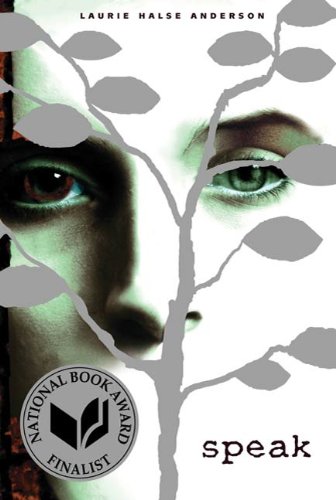
Speak by Laurie Halse Anderson

Speak is a hard book to read. It's not tough because of vocabulary level or sentence structure. It's tough because of content. It originally turned up on my reading list as part of my exploration for my LD reading ladder. This book has absolutely nothing to do with learning disorders. It is a good book though.

Melinda Sordino has a secret and it's tearing her apart. The reason she's an outcast, the reason her grades are terrible, and the reason she skips class to hang out in an abandoned janitor's closet all come back to this secret. She doesn't even want to admit it to herself and she bites through her lips to stay silent.

Her friends can't help her because she's never told them what happened. She can't speak.

This is an excellent book for young women to read. The statistics say that 1 out of every 4 teenage girls experiences sexual abuse in some way (1 out of every 6 boys, by the way, too). Clearly it's a woefully common issue for teenage girls and it happens at a time when many girls feel alienated from adult support.

I'm not saying a good book is a substitute for adult intervention and support. But I do think that books help us process difficult ideas and events.  This is not a book I would idly recommend to just any student. Certainly it is aimed more firmly at females and the subject matter is a little alarming. However, it has a solid treatment of the issue and the kind of feelings that can result. While the end is perhaps a little more "sunny" than I think the story necessarily warrants, it also emphasizes the need for communication and action.

This is a solid novel and worthy of its awards.