Showing posts with label adoption. Show all posts

Thursday, April 5, 2018

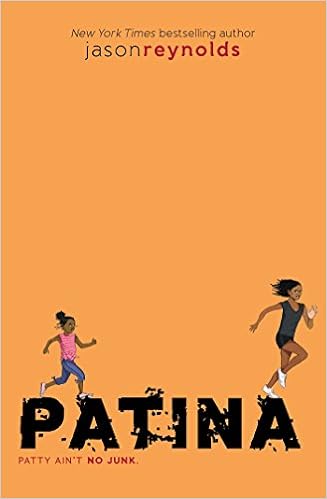
Patina by Jason Reynolds

So, these middle reader series are just too easy to eat up. This is book two in the Track series and follows Patina who is the only girl of the four newbies to join the Defenders track team.

Patina, goes by Patty, has one of the more unusual family situations. She and her younger sister, Maddy, have been adopted by a white woman and her husband. Patty and Maddy are black, so there is some background friction about that which shows up initially in the first book Ghost. The friction isn't because her adopted mom is white, it's because Patty seems to feel like she needs to defend it. Her bio mom isn't out of the picture.

Her mother, Beverly Jones, is still alive and still involved in Patty's life but because she's a diabetic double amputee, she can't take care of herself and two little girls. That's where the adopted family comes in. They are actually Patty and Maddy's uncle and aunt who adopted them when things started to get out of hand. Like I said, unusual in fiction, but probably pretty common in real life.

So, while this is still about the running, this volume comes out a little more like a family drama. Patty's got a lot of choked down rage and anger. She's going to a predominantly white prep school and she's got a lot of static in her head about it. Strangely, while Patty feels out of place at the school, it doesn't seem like it's really a race issue. It feels more like a socioeconomic division which while it does often break along race lines, skin color doesn't really seem to be at the core of the alienation.

Clearly, there are more race themes in this book. While Ghost is definitely black, in his book it was really more about being in poverty than any kind of class friction. Patina is definitely struggling with some internalized friction.

I think Ghost was a more compelling character, but Patina is a good book too. I guess I just get tired of girl drama and there's no way to write this without girl drama.

Sunday, January 28, 2018

Girls Like Us by Gail Giles

I avoided reading this book for almost a whole year. It fell somehow into a class of fiction that I know is good for me, but that I also know is going to tear me up inside. In this case, the whole premise made me a little uncomfortable.

Girls Like Us is a story told through the audio journals of two girls: Biddy and Quincy. Both girls are special ed and wards of the state. Biddy didn't get enough oxygen when she was born and so is physically normal but has pervasive intellectual and learning disability. Quincy was born neurotypical but received a traumatic brain injury when she was six and her mom's boyfriend hit her with a brick. She was left with facial disfigurement and learning disabilities specifically in the area of processing it seems. Quincy's actual IQ seems to be in the normal range to me, but the learning issues are substantial.

Both Quincy and Biddy are wards of the state and, when they graduate from high school, are placed together in a special work program. They live together and share expenses but have different jobs and a social worker checks in on them regularly.

Quincy starts the book as an abrasive and judgemental figure. She is quick to take offense and isn't afraid to speak her mind. If the story weren't told through journal entries, she would be completely intolerable, but because we get to see her thought process, it softens her some. Biddy comes across as almost achingly naive. She's been treated shabbily her whole life and seen very little love, but she accepts that as normal. It's pretty obvious from the start of the book that something bad wrong happened in her past.

On the surface, they aren't a good pair for roommates. In fact, Quincy starts the book with a horrible opinion of Biddy. It is a triumph of Giles's writing that she gives both girls amazing and believable character arcs that set them on a equal level to each other.

I also very much like Miss Lizzie, Biddy's boss and their landlord.

This book is clearly intended for a YA audience, but it was a difficult read. On top of the obvious issues of these kinds of special needs narrators, both girls had awful childhoods. Additionally, Giles confronts the sad truth that the intellectually disabled are are a much higher risk for all forms of abuse head on. While I find her treatment of the issue appropriate and even sensitive, it was difficult and heartrending.

I think highly of this book, but I wouldn't recommend it to just anyone.